What Testers Spot That You Don't: Five MOT Areas Worth a Second Look
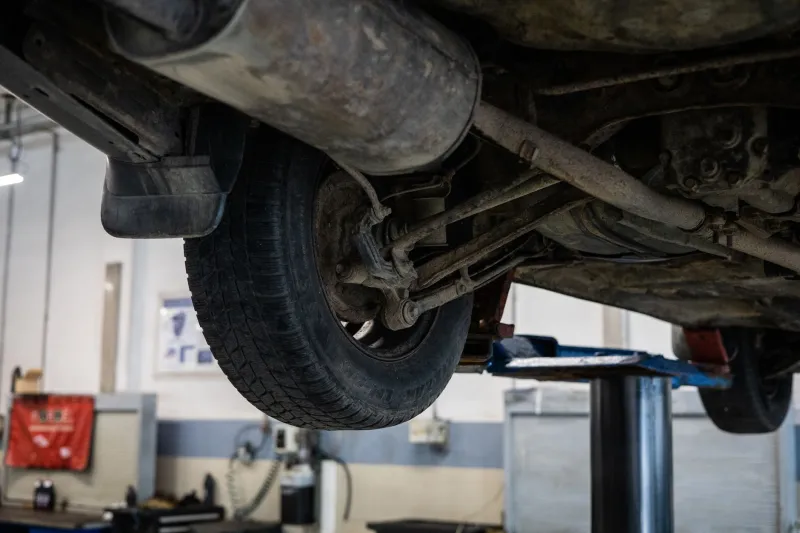
Ask a driver what an MOT covers and you will usually hear the same list: brakes, lights, tyres, emissions, maybe the horn. All true. But the test is wider than that, and some of the most common failures come from parts that never cross a driver's mind between services. They are tucked under the car, behind a wheel arch or hidden under the bonnet.
A tester is not trying to catch you out. They are checking whether the car is safe and roadworthy on the day. The trouble is that small defects in unseen places can turn into a fail, a retest and an unplanned bill. A five-minute glance before you book can help you spot trouble early — or at least know what to ask your garage about.
1. Corroded brake pipes and ferrules
Brake pipes run under the car, along the sills and towards the rear wheels. They are exposed to salt, grit and damp, and corrosion can creep in from the outside. A pipe that looks fine at a glance may be failing near a clip or at the ferrule where it joins another component.
Testers assess brake pipe condition carefully because a burst pipe means a loss of braking. This is not a cosmetic issue. If you see damp patches under the car, a low brake fluid warning or rusty-looking pipework, do not wait for MOT day. Ask a garage to inspect it. Brake pipes are not a job for a casual driveway repair unless you know exactly what you are doing.
2. Split CV gaiters
CV gaiters are the rubber boots on the driveshaft joints. They hold grease in and keep grit out. When a gaiter splits, grease gets thrown around the wheel arch and road grit starts grinding away at the joint. You may notice a clicking noise on full lock, or a greasy patch inside the wheel arch.
A split gaiter is a classic overlooked MOT failure. The boot itself is inexpensive compared with the joint it protects. Catch it early and you may save the cost of a new driveshaft joint or complete shaft. Catch it late and the repair bill grows quickly.
3. Battery security and terminals
A battery that is not properly clamped is a testable defect, and for good reason. A loose battery can move, strain its cables or short against nearby metal. Corroded terminals and poor connections can also cause warning lights, slow cranking and electrical gremlins that are hard to trace.
Have a look under the bonnet. The battery should sit firmly in its tray with the clamp secure. Terminals should be tight and free from heavy white or green corrosion. Do not overtighten anything, and do not poke around with metal tools near the terminals. If the tray itself is rusty or cracked, get it checked.
4. Leaking shock absorbers
Shock absorbers and struts are easy to ignore because they do not make a noise until they are badly worn. A tester looks for fluid leaks, damage and excessive misting. A light film of oil can be normal on some units, but a visible leak is a different matter. Worn dampers affect braking distances, steering stability and tyre wear.
Look behind the wheels after the car has been parked. An oily residue on the damper body or inside the wheel arch is worth investigating. A bounce test in the driveway is not a reliable diagnosis on modern cars, so if something looks wet or the car feels floaty over bumps, book an inspection.
5. Seat belts and buckles
Seat belts are used every day, which is exactly why drivers stop noticing them. A tester checks for cuts, fraying, retraction problems, damaged buckles and insecure mountings. A belt that does not retract properly or a buckle that sticks can fail the test.
Check every belt, including the rear ones. Pull each belt out fully and let it retract. Look for frayed edges and make sure the buckle clicks in and releases cleanly. If you regularly carry child seats, remove them before the test so the belts and mounts can be inspected properly.
The five-minute pre-test glance
You do not need a ramp to spot some of these issues. Park on level ground, grab a torch and take a slow walk around the car. Look for grease inside the wheel arches, rusty brake pipes, a loose battery, oily dampers and frayed seat belts. Check that the battery clamp is present and that nothing is rattling around under the bonnet.
This is not a substitute for a proper MOT or a garage inspection. It is simply a way to notice obvious problems before they become a surprise. If something looks wrong, describe it when you book. A good local garage would rather hear about a suspected leak than discover it halfway through the test.
Why small defects become big bills
An MOT failure is not just a paperwork problem. It means a retest, usually a second trip, and sometimes a repair you did not plan for. A split CV boot caught early is a modest job. A worn joint that has been grinding for months is not. A corroded brake pipe is a safety issue first and a cost issue second.
The best approach is boring and effective: keep an eye on the obvious, ask about the hidden, and do not ignore new noises or smells. Your tester will still find things you missed — that is the point of the test — but a little attention beforehand can turn a fail into a pass and keep the bill sensible.