Service Books Don't Do Cold Starts: Finding the Interval Your Car Really Wants
Photo: Scan by NYPL, Public domain, via Wikimedia Commons
If you've bought a car in the last few years, the service book probably makes impressive reading. Eighteen thousand miles between visits. Twenty thousand. Maybe a full two years. It's a lovely number to put in a brochure. It also wasn't written with a damp Tuesday morning in Teesside in mind.
That isn't a dig at manufacturers. Long-life oils and extended intervals are proper engineering, and for the right driver they work. The trouble is that most of us aren't the right driver. We think we are, because we're not racing round a track or towing a caravan up a mountain. But the daily reality of British motoring is often much harder on a car than a motorway cruise.
What 'long-life' is actually assuming
When a manufacturer signs off a 20,000-mile interval, it is working from a profile. That profile usually involves longer journeys where the engine reaches full temperature, a moderate climate, steady speeds, and relatively few cold starts. The oil gets hot enough to burn off condensation and fuel dilution. The battery gets a proper charge. The exhaust gets hot enough to clear itself out.
None of that is a conspiracy. It's just conditional. And if you look further back in your handbook, you'll often find a second schedule — sometimes called 'severe', 'arduous' or 'heavy use'. That one is usually far less glamorous, and it's the one that sounds a lot more like real life for a lot of UK drivers.
The British driving diet
Think about your own week. The school run is two miles each way. The commute is maybe four miles, half of it in traffic. The car sits outside in the cold and damp. You do a big shop at the weekend and a longer trip once a month if you're lucky. You might go weeks without the engine ever reaching proper operating temperature for more than a few minutes.
That pattern is tough on oil. It's tough on the battery, the brakes, the exhaust and the diesel particulate filter if you run a diesel. Short trips mean condensation builds up inside the engine and exhaust, and it doesn't always get the chance to burn off. Stop-start traffic adds heat cycles and wear. Winter salt and wet leaves don't help either.
In other words, the kind of driving that feels gentle — pottering about locally — can actually be the harder life for a car. The motorway reps who cover 25,000 miles a year often get away with longer intervals because their engines are warm and their journeys are long. The low-mileage school-run car can need more attention, not less.
Warning signs in your own routine
You don't need a diagnostic machine to work out whether you're in the 'severe' camp. A few honest questions will do it.
- Are most of your journeys under ten miles?
- Does the car do a lot of cold starts, especially in winter?
- Do you spend a fair chunk of your driving in stop-start traffic?
- Does the car sit unused for days at a time?
- Do you tow, carry heavy loads, or drive mostly in town?
If you're nodding at two or three of those, your car is probably living a harder life than the service book assumes. That doesn't mean it's about to fall apart. It does mean the interval on the sticker deserves a second look.
Time matters as much as mileage
One of the easiest traps with long-life servicing is the low-mileage car. If you only cover 6,000 miles a year, a two-year interval might look fine on mileage. But oil still degrades with time and contamination. Brake fluid absorbs moisture. Coolant and belts age. Rubber perishes. A car that sits around can develop issues that have nothing to do with the odometer.
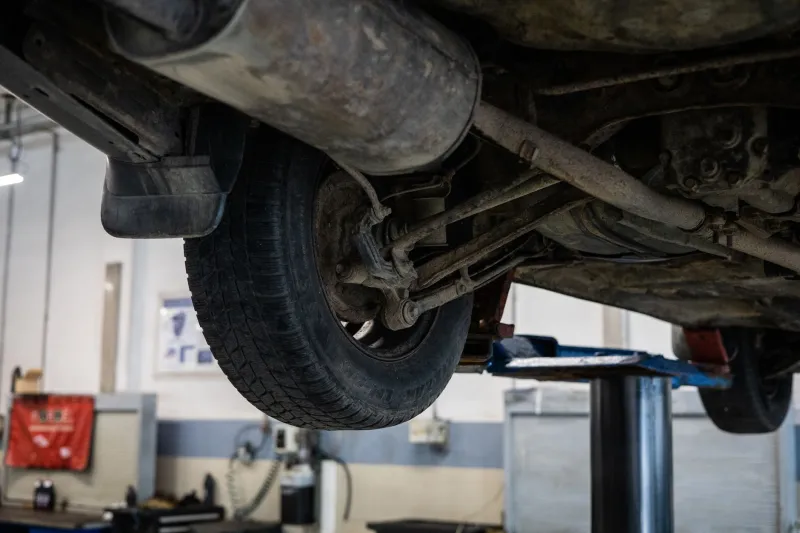
For many UK drivers, an annual visit — even if the mileage is low — is a sensible baseline. It gives a garage the chance to put the car on a ramp, check the brakes and tyres, look for leaks and corrosion, and change the oil before it has spent a year doing short, cold trips. That's not about being fussy. It's about matching the service to the actual use.
Agreeing a plan without being upsold
This is where a good garage earns its keep. Ask to see the manufacturer's schedule for your car, and ask specifically about the severe or heavy-use version. A decent garage will happily talk you through the difference. If they can't, or they wave the question away, that tells you something.
When you book, ask for an itemised quote rather than a vague 'full service'. Find out what's actually included: oil and filter, air filter, pollen filter, brake fluid, spark plugs, fuel filter, inspection items. Then ask what is genuinely due on mileage or time, and what is simply a recommendation. There's nothing wrong with a garage suggesting extra work — but they should be able to explain why, and what happens if you defer it.
Be wary of the opposite problem too: a garage that never suggests anything. Cars don't look after themselves. A brake fluid change every couple of years, a coolant check, a proper look at the tyres and suspension — these are the boring things that keep a car safe and reliable.
And remember that an MOT is not a service. The MOT checks a set of safety and environmental items on the day. It doesn't change your oil, and it won't tell you whether your oil is tired after a winter of short trips.
A simple rule of thumb
If your driving is mostly short, cold and local, treat an annual oil and filter change — or around 10,000 miles, whichever comes first — as a sensible starting point for many cars. But check your handbook's severe-use schedule and follow that if it's more specific. Some cars genuinely do need more frequent attention; others are happier with a bit more flexibility. The point is to make the decision deliberately, rather than assuming the longest number in the book applies to you.
The right interval isn't a badge of honour. It's the one that matches your week. A five-minute conversation with your garage now is a lot cheaper than the conversation you'll have when a warning light comes on in February.