Clear MOT Ticket, Cloudy Fluid: The Brake Item No Test Ever Prints
There's a particular kind of confidence that comes with a fresh MOT certificate. Brakes passed. Nothing on the sheet. Job done until next year. And for most systems on the car, that logic holds up reasonably well.
Brake fluid is the exception. It's the one part of the braking system that a roller test can't really judge, because the test measures whether the brakes work today, not what's swimming around inside the reservoir. A car with three-year-old fluid and a car with fluid changed last month will both pull up neatly on the rollers. One of them just has a lot less headroom when things get demanding.
What the MOT actually checks
Let's be fair to testers here. The MOT brake assessment is about performance and condition of visible components — discs, pads, pipes, hoses, the balance of effort across the axle, the efficiency figure on the printout. It's a snapshot of how the car behaves on the day.
What it doesn't do is sample the hydraulic fluid and send it off to a lab. There's no dipstick for brake fluid, no dashboard warning that says "this stuff is past its best", and no line on the VT30 for moisture content. So a clean brake result tells you the hardware is doing its job. It says nothing about the age of the liquid doing the pushing.
That gap catches people out, especially drivers who do low mileage. Fewer miles feels like less wear, and for pads and discs that's broadly true. Brake fluid doesn't work that way. It ages on the calendar.
The slow drink nobody notices
Most UK cars run DOT 4 fluid, and DOT 4 is hygroscopic — which is a polite way of saying it absorbs moisture from the air around it. Not in dramatic gulps. More like a slow, steady sip, through the reservoir cap's vent, through rubber hoses, through the seals over years of heat cycles.
A rough rule of thumb that's been knocking around garages for decades puts it at around two per cent moisture a year under normal use. That doesn't sound like much until you remember what brake fluid is being asked to do.
Brake fluid has a high boiling point precisely because braking generates serious heat. Fresh DOT 4 might boil somewhere north of 230°C. Add a few per cent water and that figure drops meaningfully — water boils at 100°C, and once it turns to vapour in a brake line, vapour compresses. Your pedal goes long and soft. On a steep descent with a loaded car, that's not a hypothetical.
The quieter problem is corrosion. Moisture sitting in the calipers, the ABS modulator, the steel lines — that's a slow grind on components that are considerably more expensive to replace than a bottle of fluid. ABS pumps in particular are not cheap things to be replacing because nobody changed the fluid.
Signs worth paying attention to
You won't get a light on the dash for this, so you're relying on feel and a bit of common sense.
- A pedal that feels softer than it used to. Not spongy to the floor — just less crisp. If you're pressing harder for the same stop, that's worth a look.
- A pedal that firms up if you pump it. Classic air-or-moisture hint.
- No record of a change. Dig out the service history. If you can't find a brake fluid line in the last two or three years, assume it hasn't happened.
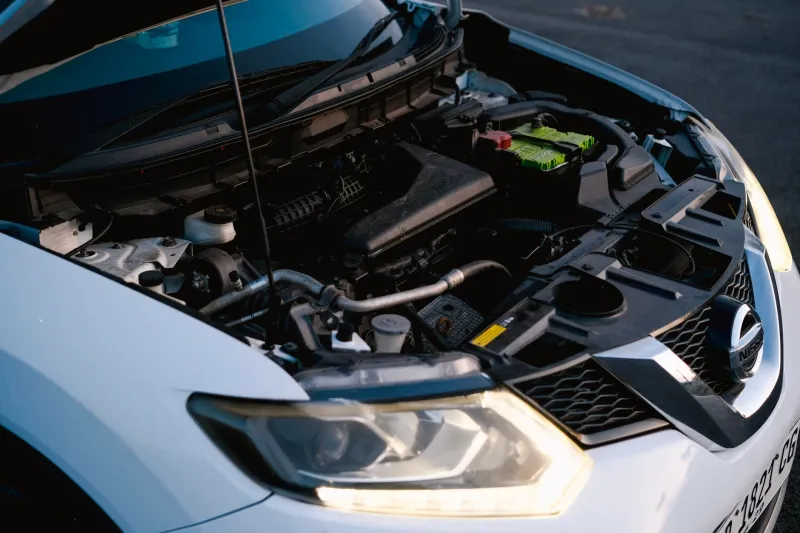
- Dark or murky fluid. Shine a torch at the reservoir — clean fluid is pale amber to nearly clear. Coffee-coloured is a strong hint.
- Braking that feels different when hot. Repeated hard stops from speed, or a long downhill in the Pennines or the Cairngorms, should not leave you with a pedal that's gone vague.
None of these are a diagnosis. They're reasons to get it checked rather than reasons to panic.
Ask for the moisture test
This is the bit most drivers never think to request. Plenty of garages have an electronic brake fluid tester — a pen-like probe that goes into the reservoir and gives a quick percentage readout. It takes a couple of minutes and many places will do it as part of a brake check or a service for very little, sometimes nothing if you're already booked in.
It's not laboratory-grade science. It's a rough indicator, and the reading can vary depending on where the probe sits and how well the fluid's mixed. But a reading of three or four per cent is a clear "get this done" signal, and even one to two per cent is worth noting if the fluid's age is unknown. If your garage doesn't have a tester, ask how old the fluid is by the book and go from there.
Most manufacturers put the interval at two years regardless of mileage. That's the number to work from, not the odometer.
Why now, before the cold
Winter asks more of your brakes than summer does. Wet, salty roads mean longer stopping distances. Grit and grime work their way into places you'd rather they didn't. Dark commutes mean you're braking in conditions where you want a predictable pedal. And cold, damp air is exactly the environment that keeps topping up the moisture in a system that's already carrying too much.
Brake fluid changes are also quick, cheap and easy to slot in alongside other work. A fluid change is a routine job — bleed the system properly, including the ABS unit where the manufacturer specifies it, and you're done. It's one of the better value-for-money jobs on the whole maintenance list.
A couple of practical notes. Brake fluid strips paint, so don't be tempted to top up or tinker at home unless you know what you're doing with a rag and a plan. And old fluid needs disposing of properly — a garage will deal with it.
The bottom line
An MOT pass on the brakes is genuinely good news, and it means the parts that testers can see and measure are doing their job. It just isn't a statement about the fluid. That's on you, and on your service schedule.
If you can't remember the last brake fluid change, that's your answer. Book it in before the gritters get busy — and while you're there, ask them to wave the tester over the reservoir. Two minutes, one number, and a lot less guessing when you're coming down a hill in January.