Crumbs, Coats and Click: The Back-Seat Belt Check That Pays Off at MOT Time
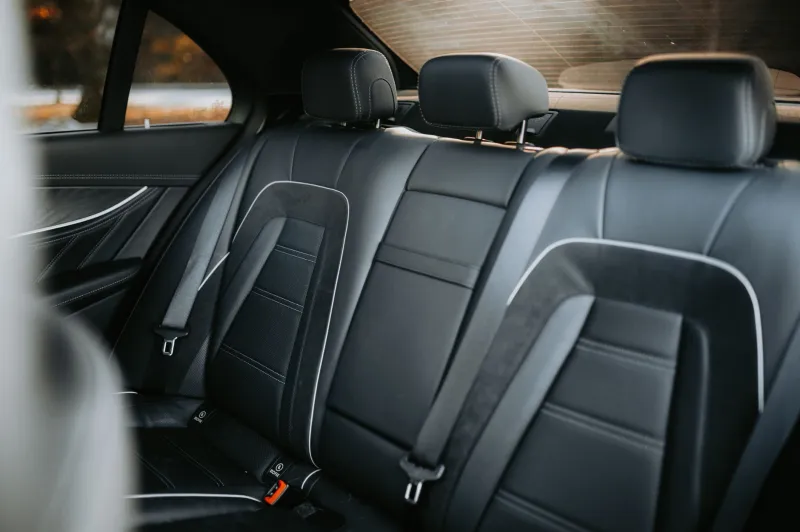
The front belts get all the glory. You touch them every single day, you feel the tug when you brake a bit too sharply, and you'd notice straight away if one stopped locking. The back ones? They live a quieter life, buried under coats, booster cushions, dog blankets and a fossilised chip or two from a Happy Meal in 2023.
Then November arrives, the school run happens in the dark, and someone in the back shouts that their buckle won't fasten. That's the moment most drivers discover a problem the MOT tester was always going to find anyway.
So before test day creeps up on you, give the back seats a proper look. It genuinely takes about five minutes, and it's one of the few checks where you can find and fix a fault yourself rather than paying someone else to tell you about it.
What the MOT actually looks at
Seatbelts are a testable item, and the rules around them are refreshingly straightforward. A tester checks the belts that are fitted and required, looking at the webbing for cuts, fraying and general deterioration, the buckle for correct latching and release, the mounting points, and whether the belt retracts and locks as it should.
A strap with a visible cut or a fray that's down to the core is a fail. A buckle that won't latch, or latches and then pops open with a tug, is a fail. A belt that's been twisted or trapped in a door for months can fail on condition too. None of that is the tester being picky — it's the difference between a belt that works in a crash and one that doesn't.
Two honest caveats worth knowing. Testers don't strip out child seats to inspect what's underneath, so if a car seat is permanently fitted you may not get a full picture of that belt on the day. And the airbag or SRS warning light on your dash isn't part of the MOT — that's a separate diagnostic job. Don't assume a clean ticket means the whole restraint system has been given a clean bill of health.
Start with the click
Do this with the engine off, on a driveway or a quiet bit of road, and work along the back bench one belt at a time.
Push the tongue into the buckle until you hear the click. Then give the strap a firm pull — not a polite tug, an actual pull. It should hold fast. Press the release button and check that the tongue pops out cleanly and the button springs back.
If a buckle feels gritty or needs a shove, have a look inside. Crumbs, dried juice, fluff and the occasional 5p are the usual suspects. A soft brush and a blast of compressed air fix most of it. If it's still stubborn after that, stop fiddling — a buckle is not a serviceable part and a replacement is usually far cheaper than an argument.
Then follow the strap
Pull each belt all the way out and let it retract slowly. You're looking for three things: that it comes out smoothly, that it goes back without help, and that the webbing itself is sound.
Run the strap through your fingers. Feel for thinning, fluffing, or a section that's been rubbed by a hard child-seat edge for years. Hold it up to a torch — daylight is scarce by mid-afternoon now, and a torch shows fraying that a gloomy footwell hides.
While you're there, check the mountings at the floor and the pillar. A bolt that's clearly loose, or a bracket with rust bubbling around it, needs a proper look from someone with the right tools. Don't just tighten it and hope.
Finally, check for twists. A belt that's been folded back on itself in the retractor for a year will never sit flat across a small passenger, and it's a two-second fix once you spot it.
The winter coat problem
This is the bit that has nothing to do with the MOT and everything to do with why the MOT exists.
A thick padded coat adds a good few centimetres between the belt and the child. In a sudden stop, that padding compresses and the belt goes slack at exactly the wrong moment. The fix is simple: take the coat off, belt up, then drape the coat back over the child like a blanket. Warm and properly restrained, rather than warm and loosely held.
Same principle for adults in the back, by the way. And if your passengers use booster cushions, check the belt is running through the correct guide rather than across a neck or under an arm.
A quick word on the law
Children under 12 and under 135cm tall need the right child restraint for their height and weight. Passengers aged 14 and over are responsible for their own belt. Between those ages, it's the driver's job. It's worth a glance at the current gov.uk guidance if your family's ages and heights are shifting — kids grow out of seats faster than anyone expects.
When to book it in
Anything that fails the click test, a strap you wouldn't trust in an emergency, or a mounting that looks tired — that's a garage job, not a Saturday afternoon job. Get it looked at well before your MOT date rather than discovering it on the ramp.
And if your test is due in the next few weeks, remember that late November and early December are noticeably quieter at most garages than the post-Christmas scramble. Book now, do the back-seat check this weekend, and the school run stays a five-minute affair rather than a roadside negotiation.
Five minutes. One torch. One wet wipe. Cheaper than a fail sheet, and considerably warmer than standing outside a school in the drizzle explaining why the car isn't going anywhere.