A Pass Is Not a Passport: Clean Air Zones and the MOT Gap
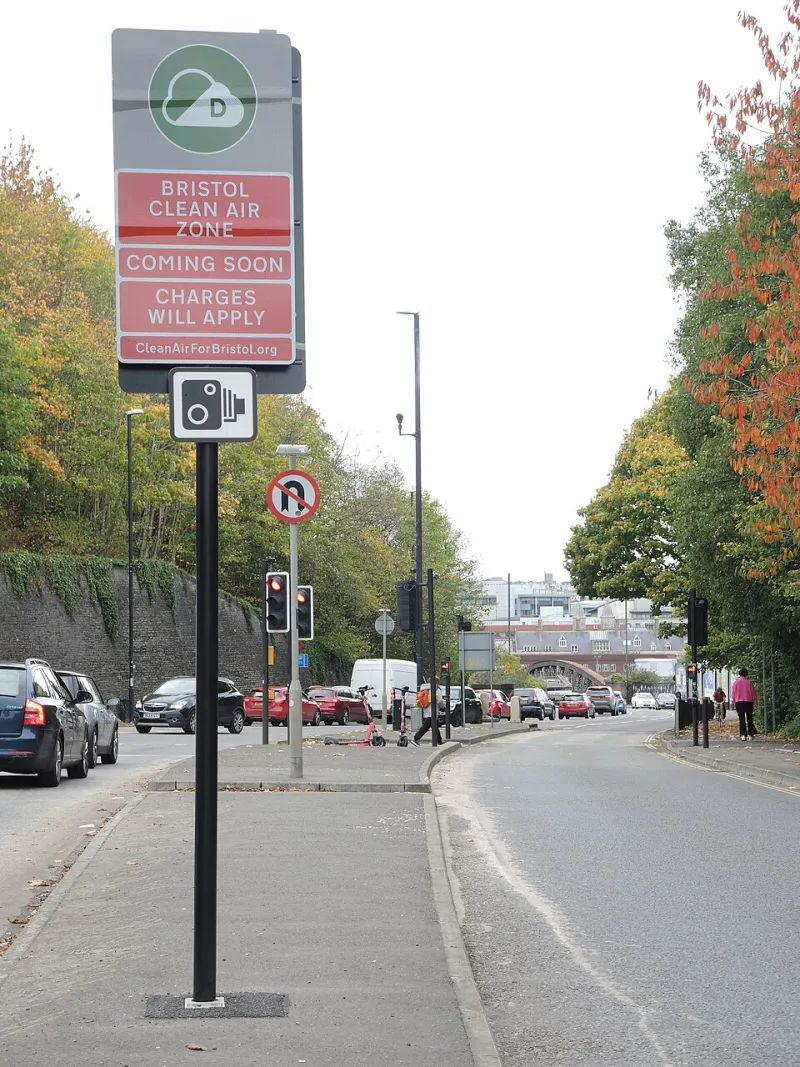
Photo: Neil Owen , CC BY-SA 2.0, via Wikimedia Commons
There’s a lovely, slightly smug feeling when the MOT tester hands over a pass certificate. The car is legal, the brakes behaved, the emissions kit did its thing, and you can get on with your week. But that certificate is not a passport to every road in the UK. A valid MOT and a clean-looking emissions printout will not automatically get you into London’s ULEZ or any other clean air zone. They answer a different question.
That gap catches out plenty of drivers, especially on airport runs, city breaks and family visits where the route quietly crosses a charging boundary. The good news is that it’s easy to check before you set off. You just need to know what the MOT does and doesn’t prove, then look up the rules for the zone you’re actually entering.
What the MOT emissions test actually checks
An MOT emissions test is a snapshot. The tester measures what comes out of the tailpipe against the limits for that vehicle’s age and type at the time of the test. A pass means the car met those limits on the day. It does not certify the car’s Euro emissions standard, and it certainly doesn’t promise free entry to a clean air zone.
This is where the confusion starts. A diesel can pass its MOT with respectable smoke readings and still be a Euro 5 model that gets charged in a zone requiring Euro 6. A petrol car can have a tidy emissions sheet and still fall outside the local standard. The MOT is about roadworthiness and current compliance with test limits. Clean air zones are about the vehicle’s built-in emissions classification and the local council’s rules.
So when someone says “but it passed the MOT with no emissions advisories”, the sensible reply is: “Good, but what’s the Euro status?”
Find the Euro standard, not just the MOT history
The Euro standard is usually the key. For London’s ULEZ, the common shorthand is petrol Euro 4 or better and diesel Euro 6 or better, though the official checker is the thing to trust. Other clean air zones have their own standards, vehicle classes, boundaries and charging arrangements. Some charge private cars; some focus on vans, taxis, lorries and buses. Some have different rules for residents. It is not a single national scheme.
Your first stop is the V5C registration certificate. Look for the emissions or Euro status information. If it is blank or unclear, ask the manufacturer’s customer service team with your registration and VIN. A dealer or a trusted garage may be able to help, but the paper trail matters: do not rely on a verbal “it should be fine” from anyone.
Be wary of date-based rules of thumb. They are useful for a rough guess, not a booking decision. A car registered around a certain month may usually have a particular Euro standard, but “usually” is not “always”. Imports, late registrations and model changes can all muddy the picture. The registration checker for the zone you are visiting is the final word.
Check the zone, not just the city
Clean air zone boundaries are not always intuitive. London’s ULEZ covers all London boroughs, so an airport run to Heathrow can take you inside it even if you never intended to drive through the centre. Heathrow also has its own drop-off charge, which is separate from the ULEZ charge. Other cities have their own boundaries, hours and payment deadlines.
Before a trip, use the official checker for each zone on your route. For London, that means the TfL ULEZ checker. For other areas, use the relevant council or government clean air zone checker. Enter the registration exactly as it appears on the car. If you have a private plate that was recently transferred, double-check that the system has caught up.
It also helps to look at a map rather than guessing. A route that skirts a city centre may still clip a zone. A hotel just outside the boundary may be fine, while the car park you planned to use sits inside it. Airport drop-off charges, congestion charges and clean air zone charges are separate things; paying one does not settle the others.
The airport-run trap
Airport runs are where this bites hardest. You are usually on a timetable, the car is full, and the last thing you want is a penalty notice arriving a fortnight later. If you are heading to Heathrow, check the ULEZ status of the car before you leave. If you are heading to another city airport, check whether a local clean air zone applies to your route or the drop-off area.
If the car is not compliant, you have options: pay the charge where the scheme allows it, park outside the zone and use public transport, borrow or hire a compliant vehicle, or rethink the trip. What you should not do is assume a fresh MOT pass makes the question disappear. It doesn’t.
Don’t let a clean air zone distract from the MOT
None of this makes the MOT less important. A car can be clean air zone compliant and still fail its MOT on a broken spring, a worn tyre or a faulty light. The two checks sit side by side: one is about the car’s safety and current test emissions, the other is about whether a local scheme will charge you to drive in.
If you are buying a used car, check both. Look at the MOT history for patterns of failures and advisories, then check the Euro status against the clean air zones you actually use. A dealer’s claim that a car is “ULEZ compliant” should be backed up by the registration checker, not just a hopeful sentence in the advert.
A five-minute routine before you go
Before any city trip or airport run, do this: find the Euro status, check the official zone checker for every area on your route, look at the boundary on a map, and note the payment deadline if a charge applies. Save a screenshot of the checker result if you are the sort of driver who likes a paper trail. Then check the airport drop-off fee separately, because it is not the same thing.
The MOT pass belongs in the glovebox. The clean air zone check belongs in your trip planning. They are both worth doing, but they are not interchangeable. At Portrack Motors, we would rather you spent five minutes checking a registration than five weeks wondering why a city trip came with an unexpected bill.